 ENG
ENG
 INA
INA
MPKB Students Explore Sustainable Waste Management and Organic Farming Practices in Bogor
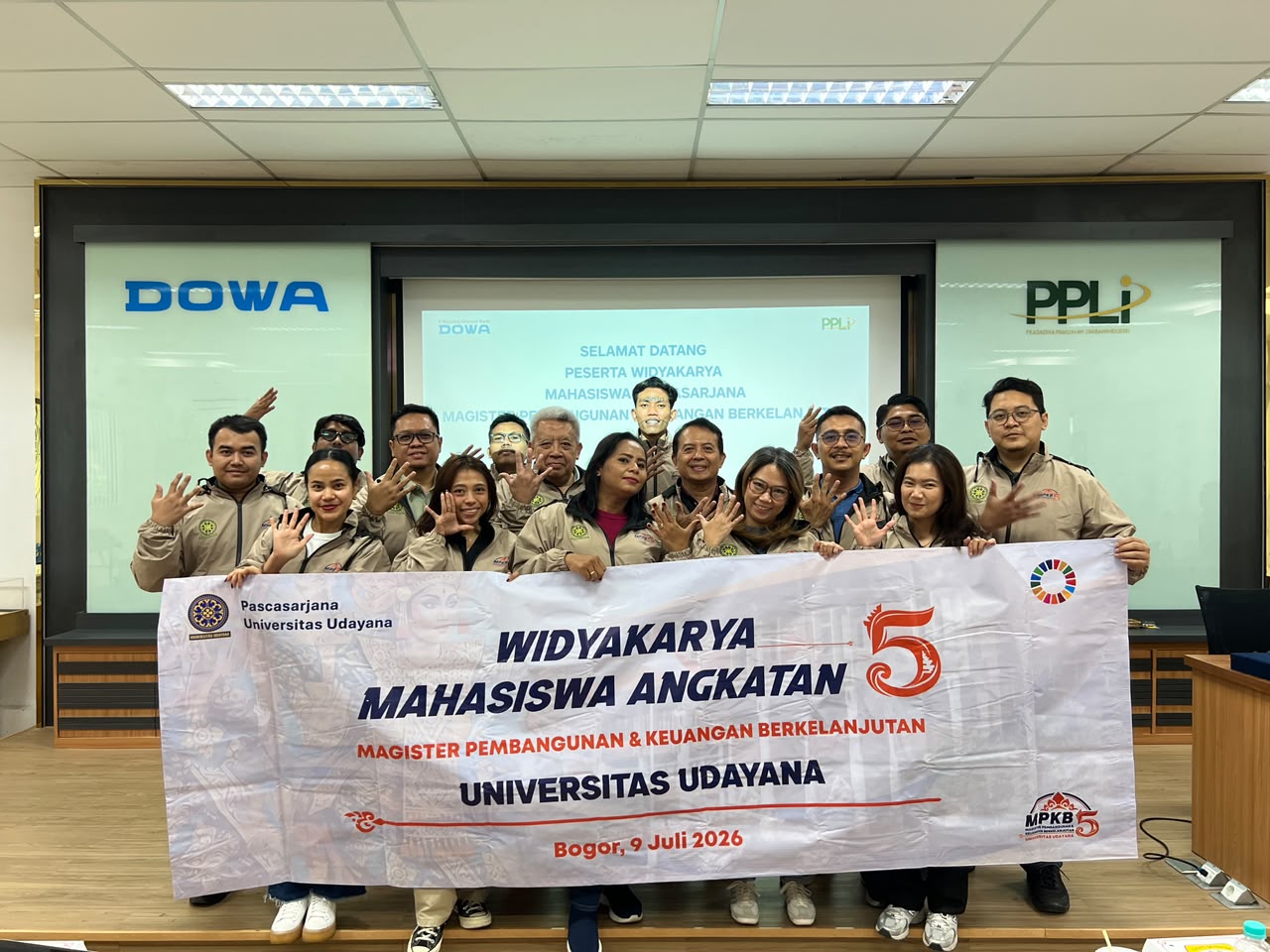
Thirteen students from Cohort 5 of the Master's Program in Sustainable Development and Finance participated in an academic field study in Bogor to strengthen their understanding of industrial waste management, organic agriculture, and the implementation of sustainability principles.
BOGOR – Students from Cohort 5 of the Master's Program in Sustainable Development and Finance (MPKB) at Udayana University Postgraduate Program successfully conducted an academic field study, locally known as Widyakarya, in Bogor, West Java. The activity took place at two locations, namely PT Prasadha Pamunah Limbah Industri (PPLI) and Megamendung Organic Forest.
The academic field study was attended by 13 students from MPKB Cohort 5. University leaders also accompanied the students during the activity, including the Director of Udayana University Postgraduate Program, Prof. I Nyoman Suprapta Winaya, S.T., M.A.Sc., Ph.D., and the Acting Coordinator of the MPKB Study Program, Prof. Dr. Ir. I Nyoman Gede Ustriyana, M.M.
The academic field study is one of the program's academic activities designed to connect classroom-based theoretical learning with real-world conditions. Through the visits, students and accompanying lecturers gained direct experience in observing sustainable development and environmental management practices.
The activity also aimed to broaden participants' knowledge, strengthen their understanding of the theories studied in class, and foster closer relationships among the academic community, industry representatives, and practitioners.
The academic field study was attended by students from MPKB Cohort 5 at Udayana University.
Students learned about hazardous and toxic waste and industrial waste management at PT PPLI.
Participants observed community-based organic farming practices in Megamendung.
The two locations were selected because they offered complementary learning focuses. PT PPLI represents Indonesia's large-scale waste management industry. The visit gave students direct insight into the management of hazardous and toxic materials, commonly referred to in Indonesia as B3 waste, as well as other types of industrial waste.
Students learned about the importance of managing waste safely, legally, and sustainably. The field experience strengthened their understanding of the relationship between industrial activities, environmental compliance, and sustainability responsibilities.
The next visit took place at Megamendung Organic Forest. At this location, participants observed community-based environmental management and organic farming practices.
The visit introduced participants to organic agriculture and environmental management practices as concrete examples of sustainability principles implemented at the community level.
The academic field study integrated industrial waste management, environmental compliance, organic agriculture, and community empowerment as key components of sustainable development and finance education.
The academic field study was expected to bridge the theories students learned in class with their practical implementation in real-world settings. The activity also provided a platform for students, lecturers, company representatives, and practitioners to build professional networks.
These professional connections are expected to support students' career development and create opportunities for more inclusive collaboration in the future.
In addition to helping the academic community develop greater awareness of environmental issues, the activity also provided added value to the companies and partner institutions visited. Academic visits offer partner institutions an opportunity to share knowledge, introduce best practices, and strengthen their positive reputation within the academic community.
The outcomes of the field visits will be documented and used as learning materials and academic references in the future. Through this academic field study, the MPKB Study Program at Udayana University Postgraduate Program continues to strengthen learning activities that respond to the needs of industry, society, and the sustainable development agenda.
Student Participants
Waste Management
Community Sustainability
Understanding Industrial Waste Management
Activity Documentation
Observing Community-Based Organic Farming Practices
Connecting Theory, Practice, and Professional Networks
.jpeg)
UDAYANA UNIVERSITY