 ENG
ENG
 INA
INA
Universitas Udayana Integrates Low-Carbon Building Principles into Its Curriculum
Universitas Udayana is strengthening low-carbon building education through training on integrating Low-Carbon Building principles and the Building Emission Assessment Tool into the Faculty of Engineering curriculum.
DENPASAR –
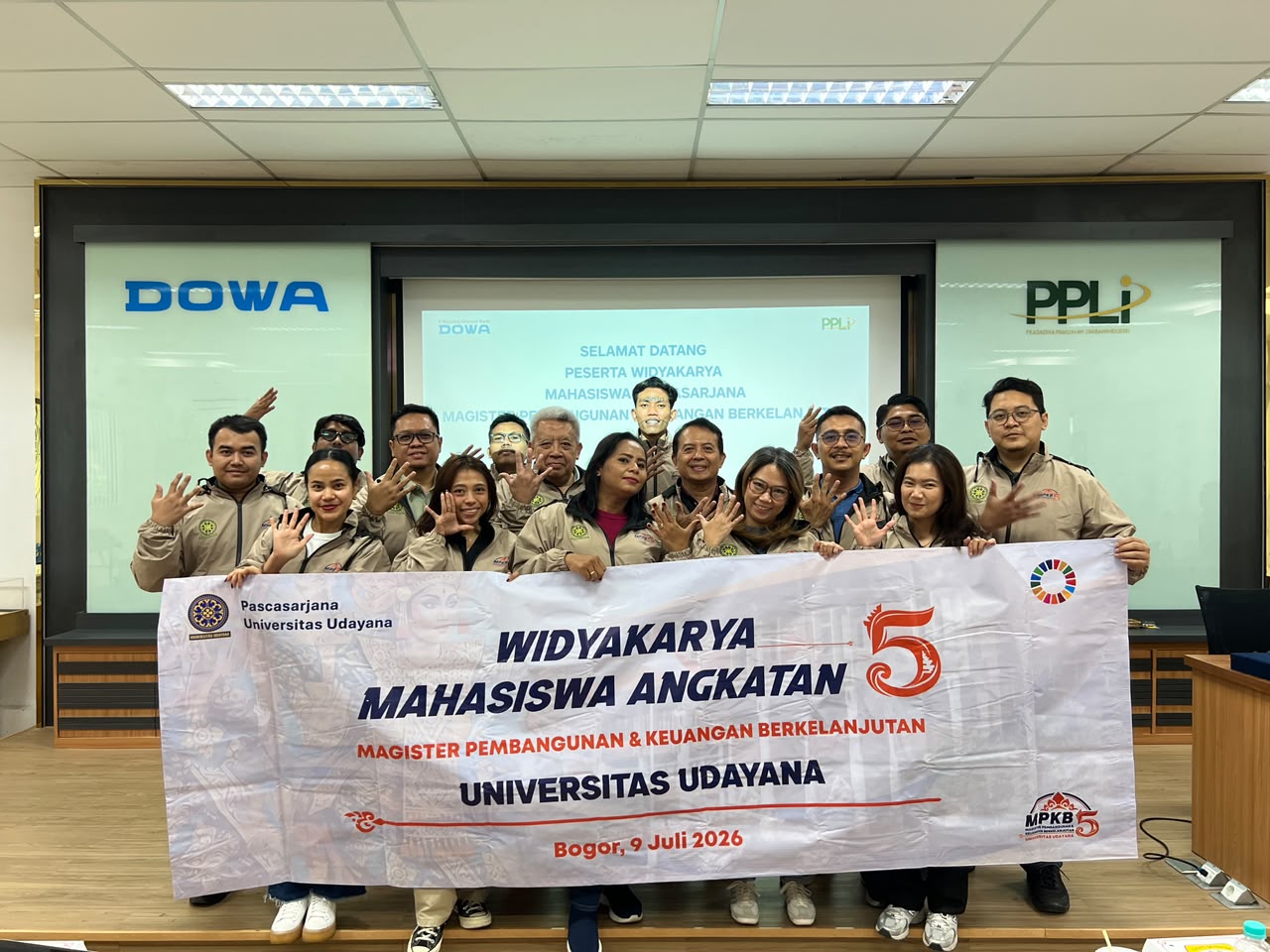
Universitas Udayana has reaffirmed its commitment to low-carbon development by conducting training on the integration of Low-Carbon Building, or LCB, principles into the Faculty of Engineering curriculum. The training was held at the Postgraduate Building of Universitas Udayana in Denpasar, Bali, on Thursday, July 23, 2026.
The training formed part of the Asia Low-Carbon Buildings Transition, or ALCBT, Project. The program focuses on developing carbon assessment tools and policies, strengthening capacity related to embodied carbon, and establishing a taxonomy framework for low-carbon buildings.
Under the LCB Syllabus Integration Program, Universitas Udayana serves as a university partner of HEAT GmbH. The partnership covers curriculum gap assessment, curriculum enhancement, and the development of a Massive Open Online Course, or MOOC.
The training involved lecturers and curriculum team members from relevant study programs within the Faculty of Engineering, particularly Architecture and Civil Engineering. It aimed to establish a shared technical foundation on low-carbon building principles, methods, and assessment tools.
The training covers regional transition, energy management, energy auditing, and Indonesia's Green Building framework.
The curriculum will be assessed, enhanced, and expanded through digital learning.
Green Building Principles has been a compulsory course in the Architecture Study Program since 2022.
Participants were introduced to the ALCBT master modules and the Building Emission Assessment Tool, or BEAT. The tool helps users identify embodied carbon and operational carbon as two major sources of building emissions.
Embodied carbon results from building materials and construction processes. Operational carbon relates to the energy consumed throughout a building's use. Understanding both sources allows environmental impacts to be considered from the initial design stage.
Universitas Udayana approaches low-carbon building integration as a multidisciplinary initiative. Architecture, Civil Engineering, Mechanical Engineering, Electrical Engineering, and Information Technology each provide complementary expertise.
Architecture contributes knowledge of building physics, passive design, and Balinese vernacular architecture. Civil Engineering supports material quantity calculations and carbon inventories.
Mechanical Engineering and Electrical Engineering contribute to cooling-load management, building systems, energy auditing, and renewable energy applications. Information Technology supports simulation, building information modelling, data processing, and digital learning development.
Building decarbonisation requires design, materials, energy systems, digital technology, and policy to be connected within one integrated learning framework.
The first module examines the regional transition towards low-carbon buildings, including climate policy, building regulations, and design responses to tropical conditions.
The second module focuses on the role of energy managers. It covers operational efficiency, building-system control, and renewable energy. The third module addresses energy auditing, performance measurement, verification, and emissions reporting using BEAT.
The fourth module discusses Bangunan Gedung Hijau, or BGH, as Indonesia's national framework for green building implementation and certification.
Participants also studied embodied carbon, building energy efficiency, BEAT data requirements, and Environmental Product Declarations. The training included a practical exercise in which participants assessed a sample building using BEAT.
The agenda also included a group discussion on integrating LCB content and BEAT into courses and student assignments. The discussion supported the preparation of follow-up measures for curriculum enhancement and MOOC development.
Universitas Udayana already has a strong academic foundation for implementing the program. The Architecture Study Program has offered Green Building Principles as a compulsory course since 2022.
The Architecture Study Program has more than 658 undergraduate students, over 50 master's students, and 13 lecturers holding doctoral degrees. The program has also obtained certification from the ASEAN University Network-Quality Assurance, or AUN-QA.
The university has a Building Science Laboratory, Autodesk Revit, Optimax simulation software, and the OASE learning platform. These facilities will support MOOC development and the application of emissions assessment tools in teaching activities.
Academic cooperation with Tsinghua University and Kansai University on energy-efficient design for tropical climates also provides a foundation for curriculum development. Collaboration with the Indonesian Institute of Architects supports efforts to connect academic research and teaching with professional practice.
BEAT will be integrated into learning activities in stages. Students will first become familiar with the tool before studying material-related carbon, operational carbon, and their application in final low-carbon building projects.
BEAT is not intended to function as a complete life-cycle assessment tool. Students will use simplified building data to understand the relationship between design choices, materials, energy consumption, and emissions.
The curriculum integration strategy consists of three stages. The first stage assesses the alignment of the existing curriculum with the four core LCB modules. The second stage enhances existing courses by incorporating carbon awareness and the use of BEAT.
The final stage expands learning through a MOOC hosted on the OASE platform and the preparation of a replication guidebook. This approach does not remove effective existing content. Instead, it introduces a carbon perspective into courses, design studios, thesis supervision, and postgraduate research.
In the opening remarks, the Director of the Postgraduate Program of Universitas Udayana emphasised the role of higher education in preparing the future designers and managers of the built environment.
What we teach them this year is, quite literally, what gets built.
Through the integration of low-carbon building principles into the curriculum, Universitas Udayana aims to prepare engineering graduates who can design functional buildings while assessing, evaluating, and reducing emissions from the earliest planning stages. (bmp)
Core Modules
Integration Stages
Academic Foundation
Building Multidisciplinary Knowledge
Four Modules and the Application of BEAT
Activity Documentation
Supported by Academic Capacity and Infrastructure
A Phased Approach to Curriculum Integration
.jpeg)
UDAYANA UNIVERSITY