 ENG
 INA
Udayana University Graduate School Explores Hospital Competitiveness and Bali’s Health Tourism Opportunities in Guest Lecture
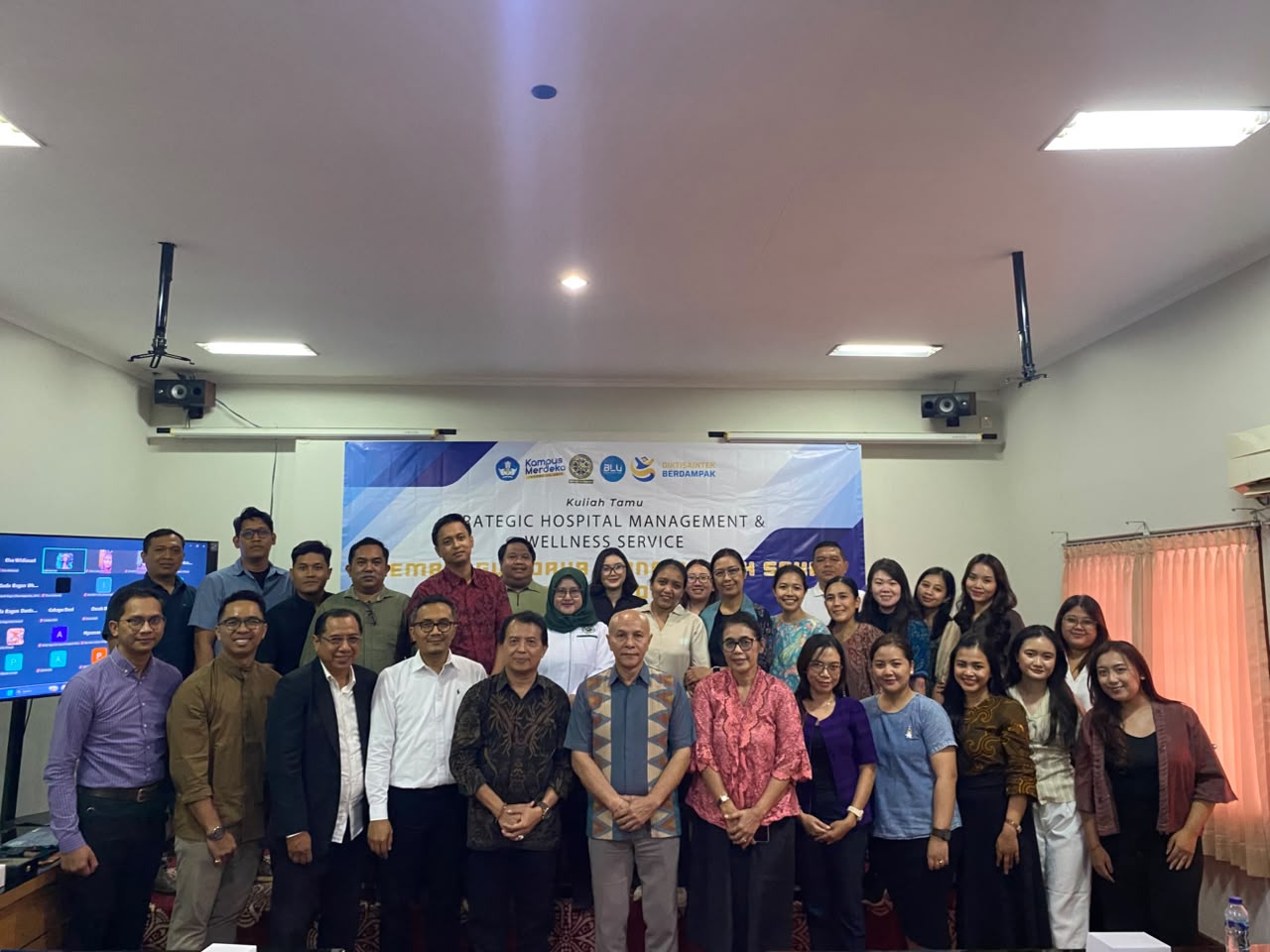
The Master's Program in Hospital Administration (MARS) at the Graduate School of Udayana University (Unud) held a guest lecture entitled "Strategic Hospital Management & Wellness Services: Building Hospital Competitiveness in the Modern Era" on Tuesday, July 28, 2026. Featuring Dr. dr. I Gede Wiryana Patra Jaya, M.Kes., the event explored hospital adaptation to regulatory changes, healthcare quality improvement, workforce development, and opportunities to strengthen Bali's position as a competitive health tourism destination.
DENPASAR –
The Master's Program in Hospital Administration (MARS) at the Graduate School of Udayana University (Unud) organized a guest lecture on "Strategic Hospital Management & Wellness Services: Building Hospital Competitiveness in the Modern Era" on Tuesday, July 28, 2026. Held from 9:30 a.m. to 1:30 p.m. Central Indonesia Time (WITA), the event addressed strategic hospital management and the opportunities and challenges of developing health tourism in Bali.
The guest speaker was Dr. dr. I Gede Wiryana Patra Jaya, M.Kes., Chairman of the Bali Medical Tourism Association (BMTA) and Director of Dharma Usadha Sidhi Hospital in Denpasar. The lecture was attended by representatives of the Graduate School leadership, the Hospital Administration Study Program Coordinator, lecturers, and MARS students.
The event began with an opening session, the Indonesian national anthem, and a joint prayer. The Director of the Graduate School of Udayana University, Prof. I Nyoman Suprapta Winaya, S.T., M.A.Sc., Ph.D., delivered welcoming remarks to the guest speaker and participants. Dr. dr. I Ketut Suarjana, S.Ked., MPH, was also involved as moderator.
The academic discussion covered two main topics: Strategic Hospital Management and Opportunities and Challenges in Developing Health Tourism in Bali. Both sessions highlighted organizational adaptability, healthcare quality, workforce competence, and service differentiation as important factors in improving hospital competitiveness.
Strengthening hospital policies, operational procedures, information systems, and internal evaluations.
Healthcare workforce management, patient safety, and specialized service development.
Integrating medical services, wellness, Balinese culture, and tourism industry partnerships.
During the Strategic Hospital Management session, participants discussed how healthcare institutions should respond to changing regulations. One question specifically addressed the adjustments hospitals would need to consider in relation to Minister of Health Regulation No. 6 of 2026, as referenced during the discussion.
In response, the speaker emphasized the importance of a systematic strategic management approach. Hospitals should begin by conducting a gap analysis between applicable regulatory requirements and their current operational conditions. The results can guide revisions to institutional policies, standard operating procedures, clinical service guidelines, information systems, and supporting documentation.
Effective implementation also requires coordination among hospital departments, staff training, monitoring, and regular internal audits. Regulatory changes should be approached as opportunities to strengthen healthcare quality and patient safety rather than merely administrative requirements.
Human resource management was another major topic. The speaker highlighted the need to assign healthcare personnel according to their competencies, provide continuous professional development, promote effective communication, and strengthen teamwork. A no-blame culture in incident reporting was also discussed as an important element of hospital patient safety systems.
The discussion further examined alternative strategies for developing supporting services such as hospital laboratories. Healthcare institutions may choose independent investment, operational partnerships, or a hybrid approach depending on their financial capacity, technological requirements, workforce availability, and patient service needs.
Operational partnerships can be suitable when hospitals face limitations in equipment, investment, or specialized personnel. However, these arrangements require clear agreements, measurable performance indicators, and strict quality supervision. Independent development may provide greater operational control when hospitals have sufficient investment capacity and internal resources.
The second session focused on opportunities and challenges in developing health tourism in Bali. A central issue concerned how healthcare institutions should strengthen workforce capabilities to provide services that meet international expectations.
The speaker explained that developing local healthcare professionals should be a priority through education, professional training, benchmarking, and study visits to established medical tourism destinations. These efforts can be complemented by collaboration with international experts to facilitate knowledge transfer and accelerate competency development.
Workforce development should address not only clinical expertise but also international service standards, foreign-language communication, cross-cultural understanding, and the management of international patient experiences. The long-term objective is to build the capacity of Indonesian healthcare professionals to deliver internationally competitive services independently.
In discussing competition with established regional medical tourism destinations such as Thailand, Malaysia, and Singapore, the speaker emphasized that Bali should not rely solely on medical technology or competitive pricing. Instead, Bali can build on its reputation as an international tourism destination by combining high-quality healthcare with cultural experiences, natural attractions, hospitality, and wellness services.
Hospitals were also encouraged to identify specialized centers of excellence, strengthen national and international accreditation, and establish partnerships with government institutions, tourism businesses, hotels, insurance providers, and travel agencies. Digital marketing, transparent pricing, accessibility for international patients, and coordinated post-treatment services were identified as important components of an effective health tourism strategy.
Such integration could provide patients with a comprehensive experience covering pre-arrival preparation, medical treatment, and post-treatment follow-up or aftercare. Developing distinctive and reliable services was presented as a way to build international patient confidence and strengthen Bali's position in regional and global health tourism markets.
Competitive hospital management requires regulatory adaptability, effective workforce development, healthcare quality improvement, patient safety, and service strategies aligned with organizational capacity. For Bali's health tourism development, local professional competence and cross-sector collaboration emerged as central priorities for building internationally oriented healthcare services.
The interactive discussion enabled students to connect strategic management concepts with operational challenges faced by healthcare institutions. Questions concerning regulatory compliance, laboratory development, workforce management, and health tourism provided practical perspectives for Hospital Administration students studying healthcare organizational management.
The event concluded at 1:30 p.m. WITA with closing remarks from the Coordinator of the Master's Program in Hospital Administration. The overall discussion reinforced the importance of aligning hospital competitiveness with healthcare quality, patient safety, and organizational sustainability.
Through this guest lecture, the Master's Program in Hospital Administration at the Graduate School of Udayana University strengthened the connection between strategic management theory and practical healthcare administration. Insights into regulatory adaptation, specialized healthcare services, and Bali's health tourism potential provided valuable academic perspectives for students preparing to address the changing demands of modern hospital management.
Regulatory Adaptation
Quality and Competence
Health Tourism
Regulatory Adaptation and Healthcare Quality Improvement
Strengthening Bali's Competitiveness as a Health Tourism Destination
.jpeg)
UDAYANA UNIVERSITY