 ENG
 INA
Udayana University Graduate School Hosts Guest Lecture on Home Care for Older Adults with Serious Medical Conditions
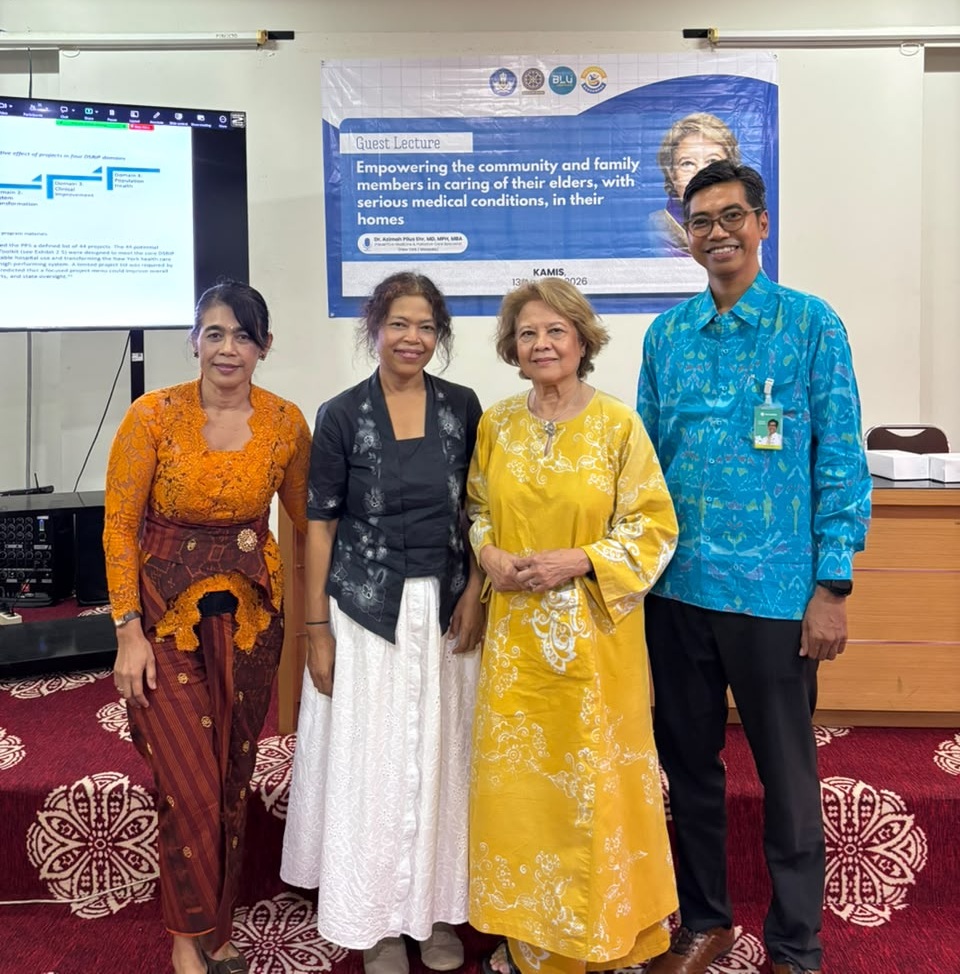
The Graduate School of Udayana University (Unud) highlighted the importance of empowering families and communities to care for older adults with serious medical conditions at home through a guest lecture scheduled for Thursday, August 13, 2026. The event featured Dr. Azimah Pilus Ehr, MD, MPH, MBA, a specialist in preventive medicine and palliative care, as the invited speaker to address family and community involvement in supporting older adults with complex healthcare needs.
DENPASAR –
The Graduate School of Udayana University (Unud) scheduled an international guest lecture entitled "Empowering the Community and Family Members in Caring of Their Elders, with Serious Medical Conditions, in Their Homes" for Thursday, August 13, 2026. The event was scheduled to take place from 2:00 p.m. to 4:00 p.m. Central Indonesia Time (WITA) in Room 3.10 of the Udayana University Graduate School Building. The lecture focused on the involvement of families and communities in caring for older adults with serious medical conditions in their home environments.
The guest lecture featured Dr. Azimah Pilus Ehr, MD, MPH, MBA, who was introduced in the event announcement as a preventive medicine and palliative care specialist, with New York and Malaysia indicated in her professional profile. Her areas of expertise provided a relevant medical perspective on disease prevention, the needs of patients with serious illnesses, and supportive approaches to healthcare.
The lecture's central theme highlighted the importance of involving family members and social support networks in caring for older relatives. Home-based care extends beyond addressing physical needs. It also involves emotional support, communication, patient comfort, and coordination with healthcare professionals.
The guest lecture was scheduled for Thursday, August 13, 2026.
From 2:00 p.m. to 4:00 p.m. Central Indonesia Time (WITA).
Room 3.10, Udayana University Graduate School Building.
Caring for older adults with serious medical conditions involves both medical needs and continuous family support in daily life. Family members are often the individuals closest to patients, assisting with daily activities, observing changes in their health, and providing companionship throughout home-based care.
In this context, family empowerment is important to ensure that caregiving responsibilities are supported by appropriate knowledge and guidance. Family members need to understand how to communicate with healthcare professionals, recognize patient needs, and identify situations requiring professional medical attention. Community support can also help reduce the practical and emotional burden experienced by caregivers.
The guest lecture's theme also recognized the home as an important setting for continuity of care. Family involvement should complement rather than replace professional medical services, with caregiving responsibilities adapted to the patient's condition, medical recommendations, and the family's capacity to provide support.
The invited speaker's background in preventive medicine and palliative care provided an academic context relevant to home-based elderly care. Preventive medicine focuses on disease prevention and health maintenance, while palliative care aims to improve the quality of life of patients and families facing serious illnesses.
Palliative care considers the physical, psychological, social, and spiritual needs of patients according to their conditions and preferences. This approach can be provided alongside other medical treatments and is not limited to end-of-life care. Family understanding of caregiving goals, available support, and treatment limitations is therefore important for patient-centered decision-making.
Within the home environment, effective caregiving requires open communication among patients, family members, and healthcare professionals. Such support should take into account patient comfort, caregivers' capabilities, and access to healthcare services whenever additional medical attention is required.
The lecture highlighted the empowerment of communities and family members in caring for older adults with serious medical conditions at home. The topic relates to informal caregiving, continuity of care, and the importance of professional support in meeting patients' healthcare needs.
Through this guest lecture, the Graduate School of Udayana University presented a healthcare topic connecting medical expertise with the roles of families and communities. The discussion of home-based care for older adults with serious medical conditions offered an academic perspective on patient-centered care, family involvement, and quality of life.
August 2026
Event Schedule
Venue
Empowering Families and Communities in Elderly Care
Perspectives from Preventive Medicine and Palliative Care
.jpeg)
UDAYANA UNIVERSITY